

Landing podcast interviews as an author depends on a single email. Because hosts often delete generic pitches in seconds, success requires prioritizing the audience's interests over book sales. If your pitches are ignored, the issue is likely the email's failure to demonstrate value for the host's listeners.
Key Takeaways
- A strong podcast pitch gets read in the first two sentences or not at all. Mastering how to pitch yourself as a podcast guest is essential for this.
- Hosts care more about audience value than your book's sales numbers.
- Personalizing each pitch to the specific show significantly improves your reply rate.
- Five email templates cover cold outreach, warm intros, follow-ups, niche shows, and reciprocal pitches.
- A single booked interview can lead to more, if you follow up the right way afterward.
Why Learning How to Pitch Yourself as a Podcast Guest Matters
Hosts reject poor asks, not books. Many authors focus on their own goals rather than providing value to the listeners. A business host prioritizes engaging storytelling over the length of time spent writing a novel. Ultimately, knowing how to pitch yourself as a podcast guest determines whether you get the interview or get ignored.
This is where podcast guesting becomes a skill rather than a lucky break. Authors like James Clear didn't build a platform by getting booked once. They built it by treating every appearance as a chance to prove they were worth having back, and worth recommending to other hosts in the same circle. That reputation starts with the very first email, long before anyone hits record.
What Authors Actually Gain From Podcast Appearances
How to Pitch Yourself as a Podcast Guest the Right Way
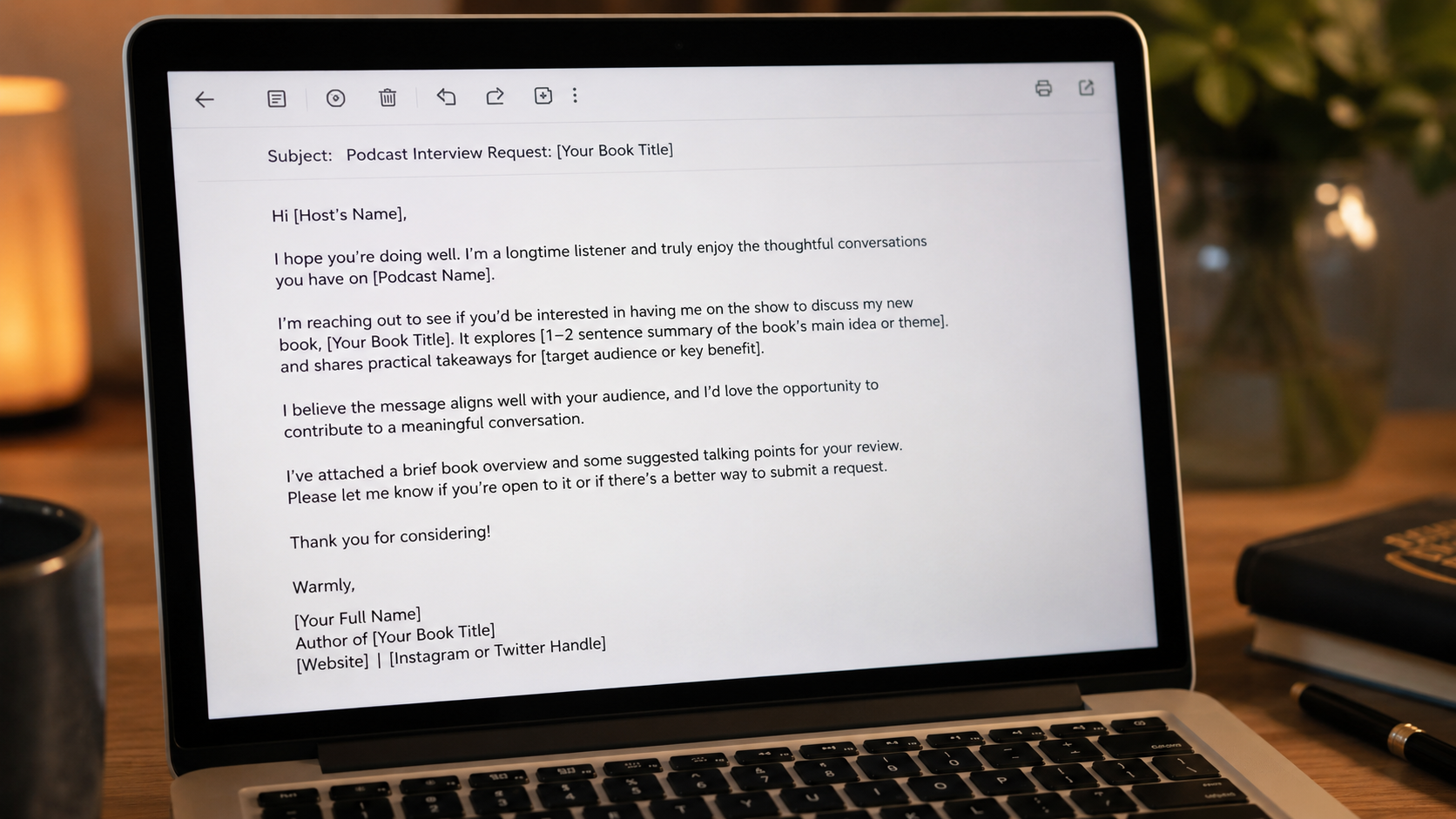
If you struggle with how to pitch yourself as a podcast guest, keep your email under 150 words. Effective podcast pitches are under 150 words and do four things: open with a specific reason for contacting that show, offer a narrow speaking topic rather than a general book plug, provide a brief credibility marker, and end with a simple call to action.
Hosts skim pitches on their phones, so get to the point fast. If they can't identify your topic in two sentences, they'll move on. For a deeper dive into converting listeners into leads, check out this no-fluff playbook for turning podcast appearances into signed clients and steady leads.
5 Email Templates That Get Authors Booked
Each template below shows you how to pitch yourself as a podcast guest for a different situation, but they all follow the same core structure. Swap in your own details, but keep the length short. Nobody replies to a wall of text.
1. The Cold Outreach Pitch
Use this when you have no connection to the host. Subject line: "Quick idea for [Podcast Name] listeners." Body: mention a recent episode you actually listened to, state your one specific topic, drop a one-line credibility marker, and ask if they're open to a short call.
This template works because it proves you did your homework instead of mass-blasting a list. This is the most fundamental way how to pitch yourself as a podcast guest effectively.
2. The Warm Introduction Pitch
Use this when a mutual contact can vouch for you. Lead with the connection's name in the first sentence, since that's what gets the email opened. Keep the ask identical to the cold version, but let the warm intro carry the credibility instead of stacking on extra proof points. It remains a great tactic for how to pitch yourself as a podcast guest.
3. The Follow-Up Pitch
This follow-up is often ignored, which is exactly why it works. Wait 7–10 days, then send a quick note referencing your first email and adding one new detail, like a recent press mention. A concise podcast guest pitch template can significantly boost reply rates since most hosts simply missed your initial email.
4. The Niche Show Pitch
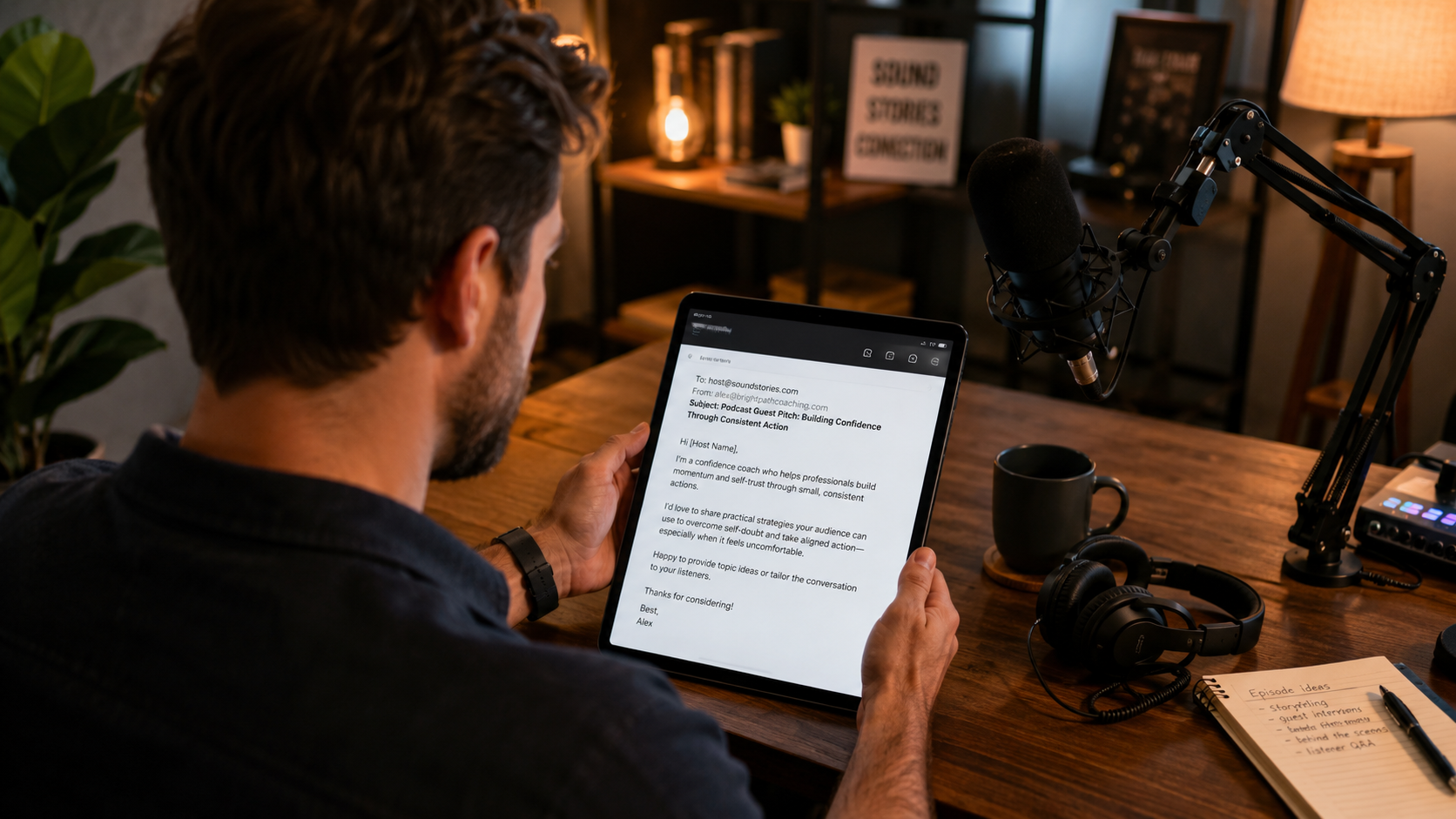
Smaller, niche shows often convert better than massive ones because their hosts read every pitch personally. Reference a specific past episode by name, explain exactly why your angle fits that show's audience, and keep the tone conversational rather than corporate.
Authors focused on podcast promotion as a long-term strategy usually find these smaller shows generate the most engaged listeners per booking. This approach to how to pitch yourself as a podcast guest is often more successful for new authors.
5. The Reciprocal Pitch
Use this once you've hosted a podcast, YouTube show, or newsletter interview series yourself. Offer to feature the host's book or work in return, and frame the ask as a trade between peers rather than a favor. This approach works especially well for building the kind of ongoing podcast tours that authors like Mel Robbins and Colleen Hoover have used to keep momentum going well past a single launch week.

Getting the Reply Is Only the Start
Booking is just the start. Arrive prepared with story angles and thank the host within 24 hours. While a well-crafted podcast guest pitch gets you the interview, your follow-through builds lasting relationships and referrals. For a broader visibility strategy, check out this guide to creating authentic content that helps you turn one appearance into ongoing engagement.
The hosts who say yes aren't doing you a favor. They're making a bet that you'll be a good guest, and good guests tend to get invited back. Treat every pitch, whether it's your first cold email or your fifth follow-up using proven approaches to pitching to podcast hosts, as the start of a relationship instead of a single transaction. Always remember that how to pitch yourself as a podcast guest is just the first step in a larger relationship-building process.
Why Podcast Tours Outperform Press Releases
Final Thoughts
Once you know how to pitch yourself as a podcast guest, none of this is complicated, and that's really the whole point. Hosts aren't looking for clever gimmicks. They're looking for guests who respect their time, know their audience, and have something specific to say. Pick the template that matches your situation, personalize the details, and send it today instead of waiting for the "perfect" pitch that never gets written.
































.jpg)

.jpg)
.jpg)
.jpg)

.jpg)
.jpg)
















.webp)
.webp)

.webp)









.webp)




.jpg)

.webp)