

Most authors burn out trying to be everywhere at once. You post on Instagram Monday, write the newsletter Tuesday, record a podcast pitch Wednesday, and by Thursday you are behind on the manuscript you were supposed to be marketing in the first place. Omnichannel marketing automation is not a bigger to-do list. It is the system that lets one piece of content move through every channel on its own, so you show up consistently without manually rebuilding the same message five times a week.

What Omnichannel Marketing Automation Actually Means
The American Marketing Association frames marketing automation as technology that tracks how an audience interacts with your content, uses that data to trigger the next relevant message automatically, and ties the result back to a measurable outcome. Applied to omnichannel marketing, automation is the layer that keeps every channel synchronized without you manually copying and pasting the same update into five different apps.
For an author, this looks like one newsletter draft that automatically becomes a series of social posts, a set of scheduled emails, and a talking point for your next podcast pitch, instead of five separate pieces of content written from scratch. McKinsey research found that more than half of consumers use three to five channels during a single purchase decision, which means a reader deciding whether to buy your book is very likely checking more than one place before they click buy. Automation is what keeps those three to five channels saying the same thing at the same time, without you sitting at a keyboard for all of them.
The Three Things Worth Automating First
You do not need to automate everything, and trying to usually backfires. Three systems carry most of the weight for an author launch.
Email sequences. A welcome sequence that fires automatically when someone joins your list, followed by a pre-scheduled launch sequence, means your email channel keeps working while you write. James Clear spent years building toward this kind of foundation before Atomic Habits existed, publishing his 3-2-1 newsletter on a consistent weekly cadence and growing his list to roughly 400,000 subscribers by the time the book launched in 2018. That consistency is what automation is meant to protect: the newsletter kept showing up in inboxes on schedule, whether or not Clear had time that week to write something new from scratch.
Content repurposing. One podcast interview, one long-form video, or one newsletter can be cut into weeks of social content instead of demanding a fresh idea every day. This is the difference between constantly scrambling for material and having a backlog that keeps publishing itself. Brandon Sanderson's team applied a version of this at scale during his record-breaking Kickstarter campaigns, keeping backers updated through a coordinated mix of his website, YouTube channel, and Reddit posts so the same story reached fans wherever they happened to be checking in that week.
Cross-platform triggers. When a new blog post, episode, or announcement goes live, a trigger can push it to your email list, schedule the social captions, and update your website automatically. This is the part most authors skip, and it is the part that actually creates the "everywhere at once" effect readers notice.

Automation Without Losing Your Voice
The biggest hesitation authors have with automation is fair: nobody wants to sound like a robot repeating itself across five apps. The fix is not less automation. It is better source material. Harvard Business Review's research on personalization found that companies with the most advanced personalization systems still depend on strong, well-organized content behind the automation, since even the best system cannot make weak source material feel personal. The tools amplify what you feed them.
That means the actual writing still has to be yours. Automation should move your voice further, not replace it with something generic that happens to be efficient. We cover exactly how to build that kind of reusable, authentic core message in Creating Authentic Content in the Age of AI, which walks through creating one strong piece of source content that automation can then adapt across platforms without flattening your voice into something forgettable.
If you want the bigger picture of how these pieces fit together before you automate any of them, our book marketing ideas guide covers the full strategy this automation layer is meant to support. And once you have the email sequence and repurposing system in place, The Author Marketing Funnel shows exactly how to connect that automation into a path that moves a reader from a TikTok view to an email subscriber to a buyer.
Where Podcasting Fits Into the Stack
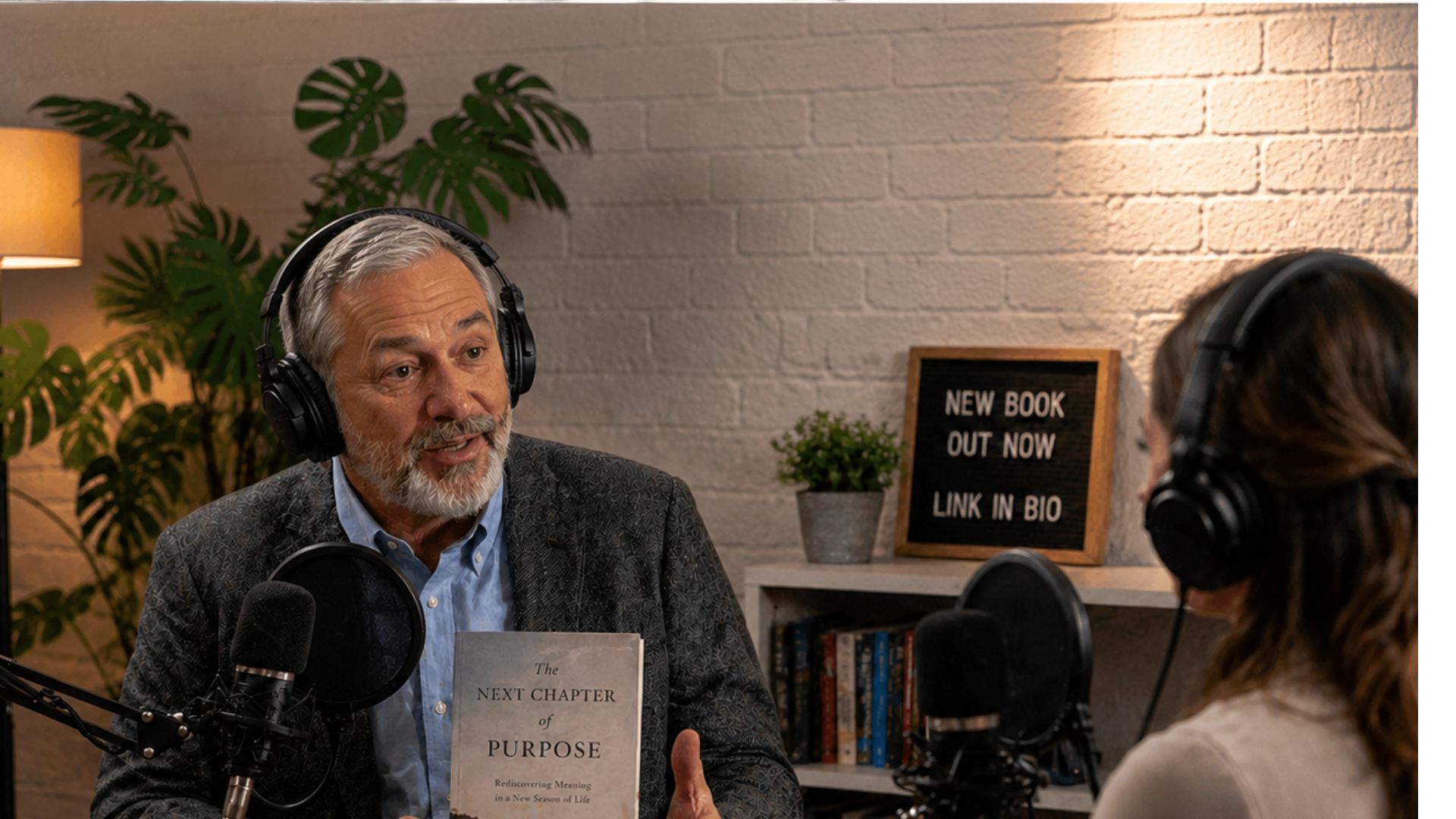
Podcast appearances are one of the easiest wins to automate, because a single conversation produces enough raw material to run for weeks. One interview can become a newsletter recap, a set of audiogram clips, a blog post, and a string of quote graphics, all scheduled from that single recording. If you want the specific system for turning one appearance into a full month of content, our Mic to Money ebook breaks down exactly how to build that pipeline, and our post on turning one podcast episode into 30 days of book promotion walks through the repurposing schedule step by step.
FAQ
Do I need expensive software to automate my book marketing? No. A basic email platform with automation triggers and a content calendar covers most of what an author needs at launch. The system matters more than the price tag.
Will automation make my content sound impersonal? Only if the source content was weak to begin with. Automation repeats and distributes what you give it, so strong, specific writing stays strong across every channel it reaches.
What should I automate first if I am starting from zero? Your email welcome sequence. Email is a channel an author owns outright rather than rents from a platform algorithm, and it is the easiest system to set up once and let run.
How many channels should an automated system actually cover? Start with two or three connected channels rather than spreading across six disconnected ones. Add more only after the first few are running smoothly on their own.
Ready to turn your content into a system instead of a daily scramble? Start with one strong piece of source material and let automation do the repeating.

































.jpg)

.jpg)
.jpg)
.jpg)

.jpg)
.jpg)
















.webp)
.webp)

.webp)






.webp)




.jpg)

.webp)